
Business Innovation 2025: Navigating the Best Future of Commerce and Society

Table of Contents
Introduction
Business – As we progress through 2025, the business landscape is undergoing transformative changes driven by technological advancements, societal shifts, and evolving consumer expectations. This article delves into the latest business innovations, their relevance to everyday life, and the profound impacts they are having on society.
1. The Rise of Agentic AI: Transforming Business Operations

In 2025, the business landscape is undergoing a significant transformation driven by the emergence of Agentic AI. Unlike traditional AI systems that require human prompts, Agentic AI operates autonomously, making decisions and executing tasks without constant human intervention. This advancement is reshaping how businesses operate, offering unprecedented efficiency and innovation.
Understanding Agentic AI
Agentic AI refers to artificial intelligence systems endowed with autonomy, enabling them to make decisions, learn from interactions, and adapt to new situations independently. These systems can manage complex tasks, reason through options, and find optimal solutions without human oversight. This evolution marks a shift from AI as a tool to AI as a collaborator in business processes.
Agentic AI in Business Operations
Enhancing Efficiency
Businesses are leveraging Agentic AI to streamline operations. For instance, companies like Morgan Stanley have introduced AI assistants powered by advanced models to help advisors retrieve insights and summarize client meetings, thereby enhancing productivity.
Revolutionizing Decision-Making
Agentic AI systems are transforming decision-making processes. By analyzing vast amounts of data, these systems can provide actionable insights, predict market trends, and suggest strategic moves, enabling businesses to stay ahead in competitive markets.
Automating Complex Tasks
Tasks that were once time-consuming and prone to human error are now being automated. Agentic AI can manage supply chains, optimize inventory levels, forecast demand, and handle logistics planning, leading to cost savings and improved accuracy.
Societal Impact
Workforce Transformation
The integration of Agentic AI is reshaping the workforce. While some fear job displacement, the reality is a shift in job roles. Employees are transitioning from performing routine tasks to overseeing AI systems, focusing on strategic and creative aspects of work.
Ethical Considerations
As AI systems gain autonomy, ethical concerns arise. Issues related to accountability, decision-making transparency, and potential biases in AI algorithms are at the forefront. Establishing robust governance frameworks is essential to address these challenges.
Accessibility and Inclusivity
Agentic AI has the potential to democratize access to services. By automating processes, businesses can offer services to a broader audience, including underserved communities, thereby promoting inclusivity.
Challenges and Considerations
Data Privacy and Security
With AI systems handling sensitive data, ensuring data privacy and security is paramount. Implementing stringent data protection measures and complying with regulations are critical to maintaining trust.
Integration with Existing Systems
Integrating Agentic AI into existing business infrastructures can be complex. Businesses must assess compatibility, invest in training, and possibly overhaul legacy systems to fully leverage AI capabilities.
Continuous Learning and Adaptation
Agentic AI systems require continuous learning to adapt to changing environments. Businesses must ensure these systems are regularly updated and monitored to maintain effectiveness and relevance.
Future Outlook
The adoption of Agentic AI is expected to accelerate. According to reports, 52% of organizations intend to employ AI agents in their workflows this year. As technology advances, we can anticipate more sophisticated AI systems capable of handling increasingly complex tasks, further transforming business operations.
Agentic AI is not just a technological advancement; it’s a paradigm shift in how businesses operate. By embracing this innovation, companies can enhance efficiency, foster innovation, and stay competitive in an ever-evolving market. However, it’s crucial to address the accompanying challenges proactively to harness the full potential of Agentic AI responsibly.
2. Open-Source AI: Democratizing Innovation
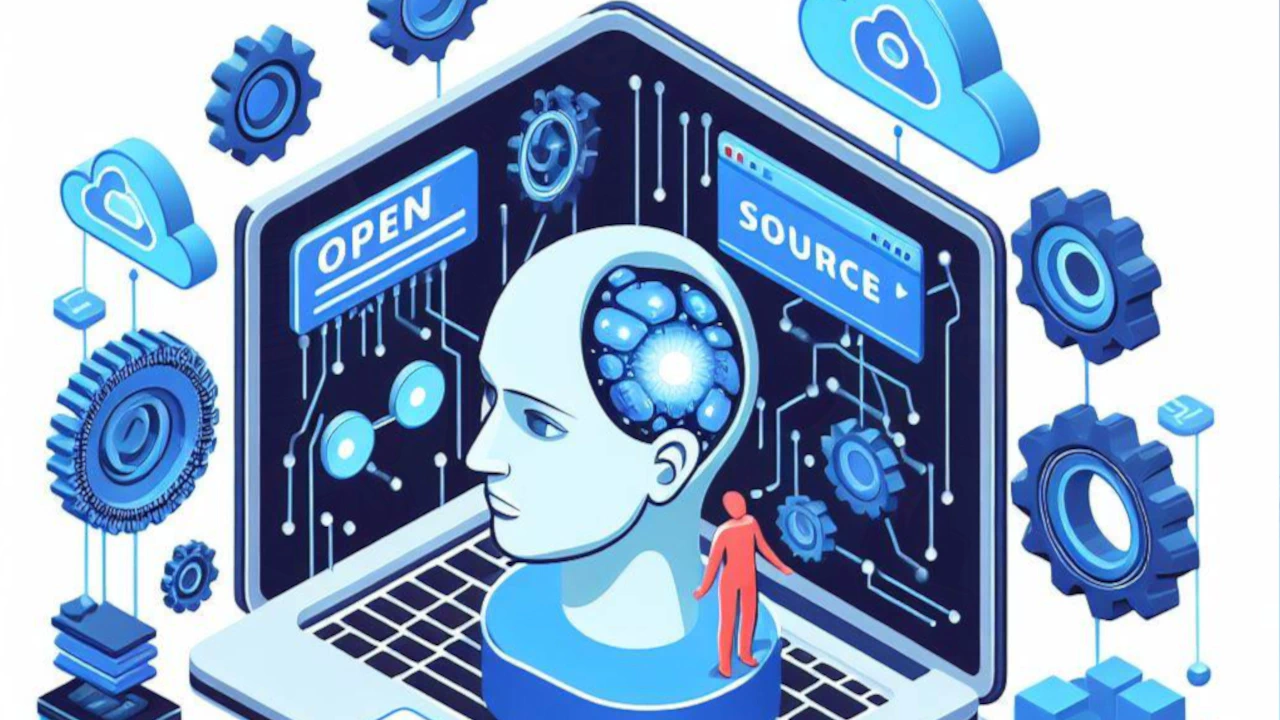
In the rapidly evolving landscape of 2025, open-source artificial intelligence (AI) has emerged as a transformative force, reshaping industries, empowering communities, and democratizing access to cutting-edge technologies. By making advanced AI tools and models freely available, open-source initiatives are breaking down barriers, fostering innovation, and enabling a more inclusive digital future.
The Rise of Open-Source AI
Open-source AI refers to AI models, frameworks, and tools that are publicly accessible, allowing developers, researchers, and organizations to use, modify, and distribute them freely. This approach contrasts with proprietary AI systems, which are often restricted and costly.
Key Developments in 2025
- Meta’s Llama Model: Meta’s Llama, an open-source AI model, has been downloaded over a billion times, enabling widespread experimentation and application across industries.
- DeepSeek’s Impact: The Chinese open-source AI model DeepSeek has gained significant traction, becoming the most downloaded free app on the Apple App Store in the US. Its open-source nature allows for extensive customization and innovation.
Democratizing Innovation
Open-source AI is leveling the playing field, allowing startups, small businesses, and underrepresented communities to access and develop advanced AI technologies.
Empowering Small Businesses
By eliminating cost barriers, open-source AI enables small enterprises to innovate and compete with larger corporations. For instance, WriteSea, a Tulsa-based small business, utilized Meta’s Llama model to enhance job placement solutions, citing cost savings and data security as key benefits.
Fostering Global Collaboration
Open-source platforms encourage collaboration across borders, disciplines, and sectors. By sharing resources and knowledge, developers and researchers worldwide can collectively advance AI technologies, leading to more robust and diverse solutions.
Societal Impact
The widespread adoption of open-source AI is influencing various aspects of society, from education and healthcare to governance and community development.
Enhancing Education
Educational institutions are integrating open-source AI tools into curricula, providing students with hands-on experience in developing and deploying AI models. This approach fosters a more skilled and adaptable workforce.
Improving Healthcare
Open-source AI models are being utilized to develop affordable and accessible healthcare solutions, such as diagnostic tools and personalized treatment plans, particularly in underserved regions.
Promoting Transparency and Trust
The open nature of these AI systems allows for greater scrutiny, reducing biases and enhancing accountability. This transparency builds trust among users and stakeholders.
Challenges and Considerations
Despite its benefits, open-source AI also presents challenges that need to be addressed to ensure responsible and equitable development.
Data Privacy and Security
With increased access to AI models, there is a heightened risk of misuse and data breaches. Implementing robust security measures and ethical guidelines is essential.
Quality Control
Ensuring the reliability and accuracy of open-source AI models requires continuous monitoring and validation, especially when used in critical applications like healthcare and finance.
Resource Disparities
While open-source AI is accessible, the computational resources required to train and deploy these models can be prohibitive for some organizations. Efforts to provide affordable infrastructure and support are necessary.
he Future of Open-Source AI
Looking ahead, open-source AI is poised to play an even more significant role in shaping a fair and innovative digital society.
Policy and Regulation
Governments and regulatory bodies are recognizing the importance of open-source AI and are working to develop policies that promote its ethical and equitable use.
Community Engagement
Continued collaboration among developers, researchers, and communities will drive the evolution of open-source AI, ensuring it meets diverse needs and challenges.
Technological Advancements
Ongoing research and development will lead to more efficient, scalable, and user-friendly open-source AI tools, further expanding their reach and impact.
Open-source AI is transforming the technological landscape by making advanced tools accessible to a broader audience, fostering innovation, and promoting inclusivity. While challenges remain, the collaborative efforts of stakeholders across sectors are paving the way for a more equitable and empowered society.
3. AI-Driven Fraud: Emerging Threats in the Financial Sector
In 2025, the financial sector stands at the crossroads of innovation and vulnerability. While artificial intelligence (AI) has revolutionized banking operations, enhancing efficiency and customer experience, it has also opened new avenues for sophisticated fraud. The same technologies that empower institutions are being weaponized by cybercriminals, leading to a surge in AI-driven financial fraud. This article delves into the emerging threats posed by AI in the financial sector, their implications for society, and the measures being adopted to combat them.
The Evolution of Financial Fraud in the Age of AI
Traditional Fraud vs. AI-Driven Fraud
Historically, financial fraud involved tactics like phishing emails, counterfeit checks, and identity theft using stolen personal information. However, the advent of AI has transformed the landscape:
- Deepfake Technology: AI-generated audio and video can convincingly mimic individuals, leading to fraudulent transactions and unauthorized access to accounts.
- Synthetic Identities: Combining real and fabricated data, AI can create entirely new identities, making it challenging for traditional verification systems to detect anomalies.
- Automated Phishing: AI can craft personalized phishing messages at scale, increasing the success rate of such attacks.
Emerging AI-Driven Fraud Threats
Deepfake Impersonation
One of the most alarming developments is the use of deepfake technology to impersonate individuals. In a notable case, scammers used AI-generated video calls to impersonate a company’s CFO, convincing employees to transfer $25 million to fraudulent accounts.
Voice Cloning
AI can replicate a person’s voice with minimal audio samples. This capability has been exploited to deceive bank employees into authorizing transactions, believing they were speaking with legitimate clients or executives.
Synthetic Identity Fraud
By blending real and fictitious information, AI can generate synthetic identities that pass traditional verification checks. These identities are then used to open accounts, apply for loans, and commit other fraudulent activities.
AI-Powered Malware
Advanced malware now employs AI to adapt and evolve, making detection and prevention increasingly difficult. Such malware can learn from its environment, altering its behavior to bypass security measures.
Societal Implications
Erosion of Trust
As fraud becomes more sophisticated, public trust in financial institutions may wane. Customers might become hesitant to engage in digital banking, fearing potential breaches and scams.
Economic Impact
The financial repercussions are significant. Fraud losses in the U.S. alone are projected to reach $40 billion by 2027, emphasizing the urgent need for robust countermeasures.
Psychological Effects
Victims of AI-driven fraud often experience stress, anxiety, and a sense of violation, especially when personal data is manipulated or misused.
Combating AI-Driven Fraud
Advanced Detection Systems
Financial institutions are investing in AI-powered detection systems that can identify anomalies in real-time, enhancing the ability to thwart fraudulent activities before they escalate.
Federated Learning
This approach allows multiple institutions to collaboratively train AI models without sharing sensitive data, improving fraud detection while maintaining privacy.
Regulatory Measures
Governments and regulatory bodies are introducing stricter guidelines to ensure financial institutions adopt adequate security measures and remain accountable for breaches.
Public Awareness Campaigns
Educating the public about potential threats and promoting best practices can empower individuals to recognize and avoid scams.
The integration of AI into the financial sector offers unparalleled opportunities for growth and efficiency. However, it also introduces complex challenges in the form of AI-driven fraud. Addressing these threats requires a multifaceted approach, combining technological innovation, regulatory oversight, and public education. By staying vigilant and proactive, the financial industry can harness the benefits of AI while safeguarding against its potential misuses.
4. Menopause Market: Addressing a Long-Neglected Demographic

In 2025, the menopause market is experiencing a significant transformation. Once overlooked, this sector is now gaining attention due to increased awareness, technological advancements, and a growing demand for personalized care. This article explores the current state of the menopause market, its relevance to society, and the innovations shaping its future.
Understanding the Menopause Market
The menopause market encompasses products and services designed to address the physiological and hormonal changes women experience during menopause. This includes hormone replacement therapies (HRT), non-hormonal treatments, dietary supplements, wearable technologies, and digital health platforms.
Market Size and Growth
As of 2025, the global menopause market is valued at approximately $21.39 billion and is projected to reach $30.52 billion by 2030, growing at a compound annual growth rate (CAGR) of 7.3% . This growth is driven by increased life expectancy, greater awareness of women’s health issues, and the development of innovative products and services.
Societal Relevance
Impact on Women’s Lives
Menopause affects a significant portion of the female population, with an estimated 1.1 billion women globally expected to be experiencing menopause by 2025 . Symptoms such as hot flashes, mood swings, and sleep disturbances can significantly impact quality of life and work productivity. In fact, one-third of peri/menopausal women consider leaving the workforce due to these symptoms, and 7% actually do .
Breaking the Stigma
Historically, menopause has been a taboo topic, leading to a lack of open discussion and understanding. However, increased social media engagement and celebrity advocacy are helping to destigmatize menopause. Influencers and public figures are sharing their experiences, encouraging others to seek support and information .
Innovations in the Menopause Market
Technological Advancements
The integration of technology into menopause care is revolutionizing the market. Wearable devices, such as Amira’s ‘The Terra System,’ predict hot flashes and activate cooling mechanisms to alleviate discomfort . Similarly, identifyHer’s ‘Peri’ wearable tracks perimenopause symptoms, providing actionable insights for users .
Personalized Care
Artificial intelligence (AI) is being leveraged to offer personalized treatment plans. Platforms like thePause™ provide real-time symptom tracking and tailored guidance, empowering women to manage their menopause journey effectively .
Non-Hormonal Treatments
There is a growing demand for non-hormonal treatment options. Innovations include dietary supplements, herbal remedies, and over-the-counter products designed to alleviate menopause symptoms without the risks associated with HRT .
Market Segmentation
Product Types
- Hormone Replacement Therapy (HRT): Traditional treatment involving estrogen and progesterone to alleviate symptoms.
- Non-Hormonal Treatments: Includes dietary supplements, herbal remedies, and lifestyle interventions.
- Wearable Technologies: Devices that monitor symptoms and provide real-time relief.
- Digital Health Platforms: Apps and online services offering personalized care plans and community support.
Distribution Channels
- Pharmacies: Traditional point of sale for medications and supplements.
- Online Retailers: E-commerce platforms offering a wide range of products.
- Specialty Stores: Retailers focusing on women’s health and wellness products.
Challenges and Considerations
Quality and Safety
As the market expands, ensuring the quality and safety of products is paramount. Regulatory oversight is necessary to prevent the proliferation of unverified and potentially harmful products.
Accessibility
While innovations are promising, ensuring that all women have access to these products and services is crucial. Efforts must be made to reach underserved populations and address disparities in healthcare access.
Future Outlook
The menopause market is poised for continued growth and innovation. As awareness increases and technology advances, we can expect more personalized, effective, and accessible solutions for women navigating menopause. Collaboration between healthcare providers, technologists, and policymakers will be essential in shaping a market that truly meets the needs of this demographic.
The menopause market in 2025 reflects a broader shift towards recognizing and addressing the unique health needs of women. Through technological innovation, increased awareness, and a commitment to personalized care, the industry is beginning to serve a demographic that has long been overlooked. Continued efforts are necessary to ensure that all women have access to safe, effective, and supportive resources during this significant life stage.
5. Longevity Economy: Preparing for an Aging Population
Advancements in healthcare are increasing life expectancy, leading to the emergence of the longevity economy. Businesses are adapting to meet the needs of an older, yet active and affluent, population.
Key Considerations:
- Product and Service Adaptation: Companies are redesigning products and services to cater to older consumers, emphasizing accessibility, usability, and relevance.
- Workforce Dynamics: As people work longer, organizations are implementing flexible work arrangements and lifelong learning opportunities to accommodate aging employees.
- Healthcare Innovations: The demand for healthcare services is driving innovation in medical technologies and personalized care solutions.
Societal Impact:
The longevity economy presents opportunities for economic growth and societal enrichment. However, it also requires addressing challenges related to healthcare infrastructure, retirement systems, and intergenerational equity.
Conclusion
The business innovations of 2025 are reshaping industries and societies. From the integration of Agentic AI to the focus on underserved demographics, these developments are driving progress and presenting new challenges. Businesses and policymakers must collaborate to harness these innovations responsibly, ensuring they contribute positively to society and the economy.